Type · antoninus-pius-annona-denarius
Current: Roman Imperial, Antoninus Pius, AR denarius, Rome, 157–158 AD (RIC III 274)
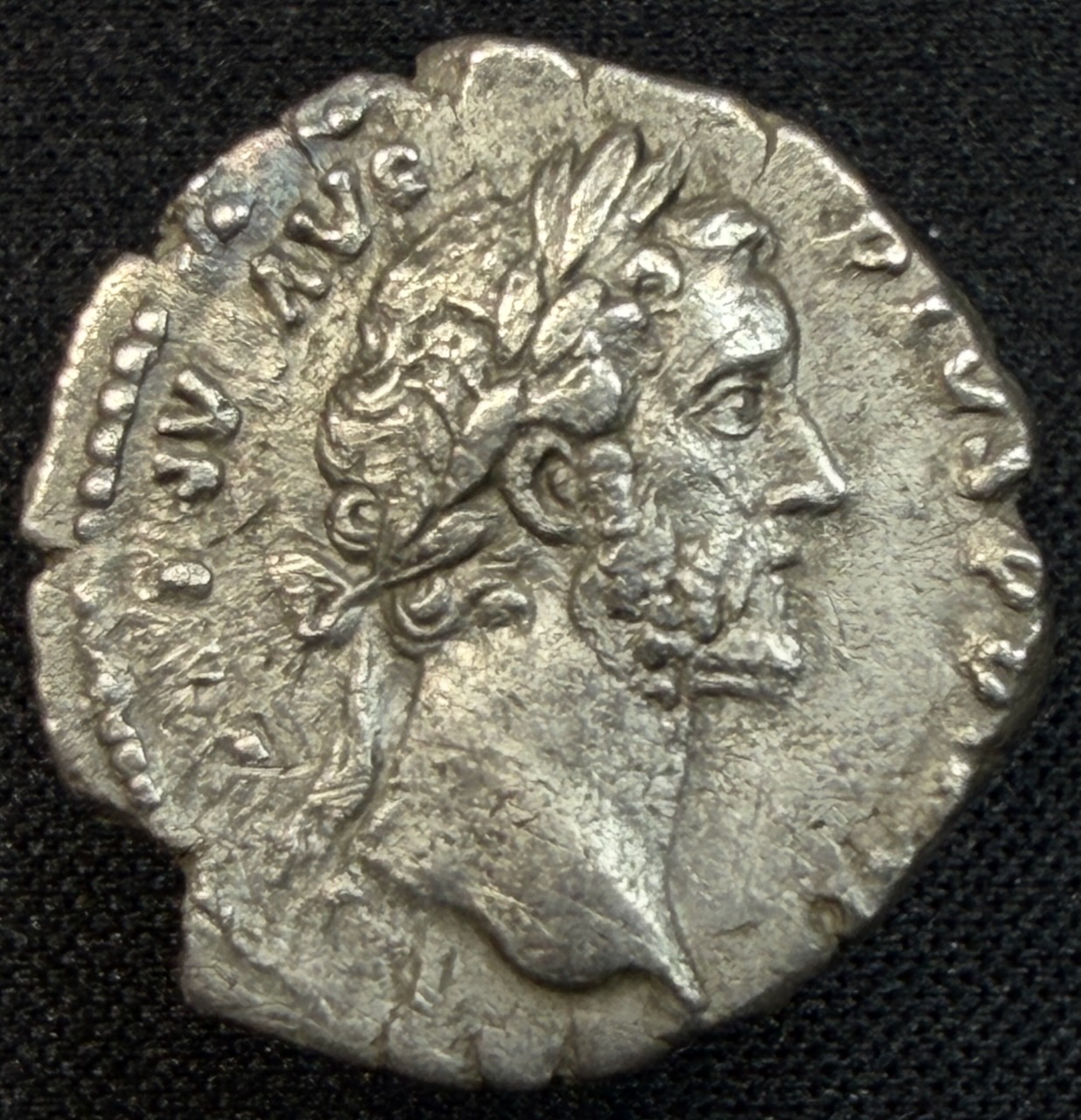
Obverse: Laureate head of Antoninus Pius right
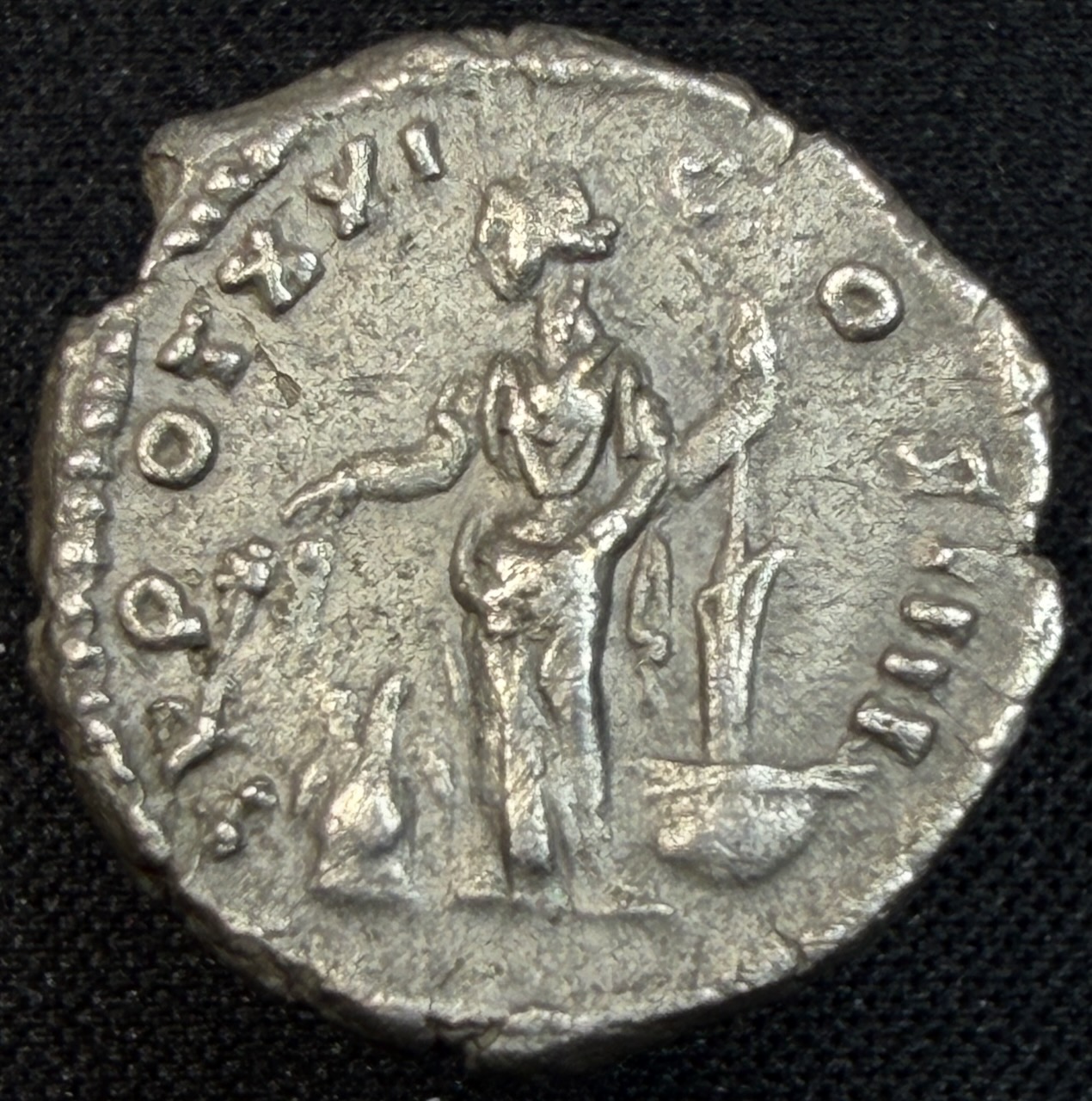
Reverse: Annona standing left, heads of grain in right hand over modius at feet, rudder on prow in left
Primary reference: RIC III 274
35 specimens in public collections (Mpv 12, Mall 4, ANS 3, British Museum 3, Vienna 3); 8 British finds recorded by the Portable Antiquities Scheme; weights 2.37–3.7 g, median 3.11 g across 41 recorded; die axis most often 6h.
This collection's specimen, at 2.71 g (my scale), is heavier than 15% of the recorded weights.
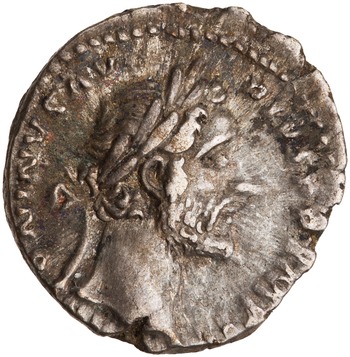
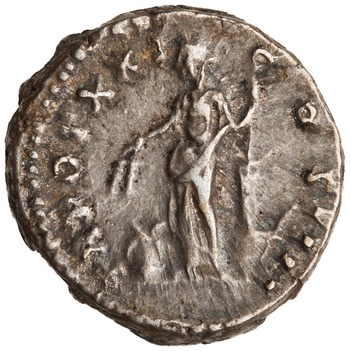
American Numismatic Society, 1956.127.474. CC BY-NC 4.0. https://numismatics.org/collection/1956.127.474
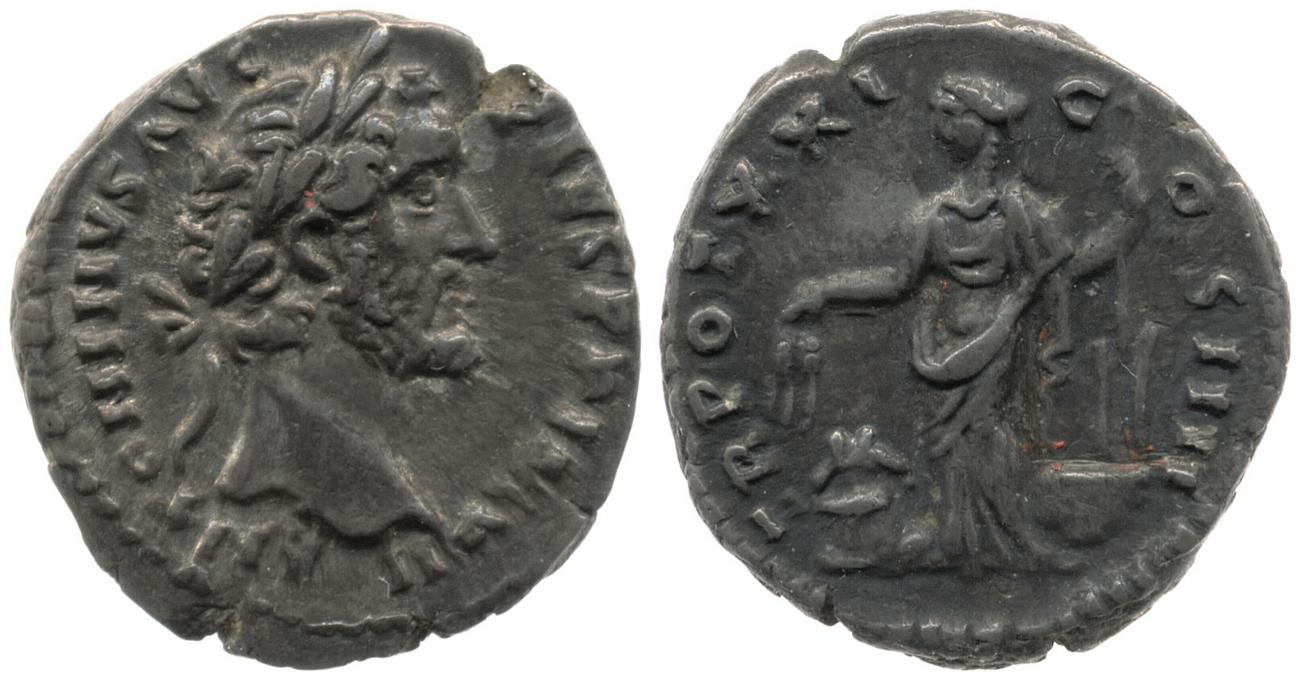
© The Trustees of the British Museum, 1853,0105.56. CC BY-NC-SA 4.0. https://www.britishmuseum.org/collection/object/C_1853-0105-56
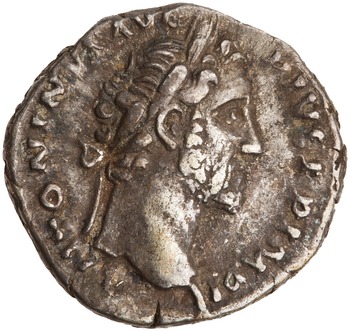
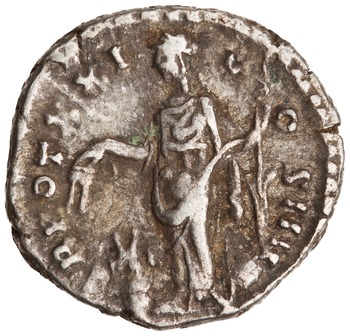
American Numismatic Society, 1956.127.475. CC BY-NC 4.0. https://numismatics.org/collection/1956.127.475
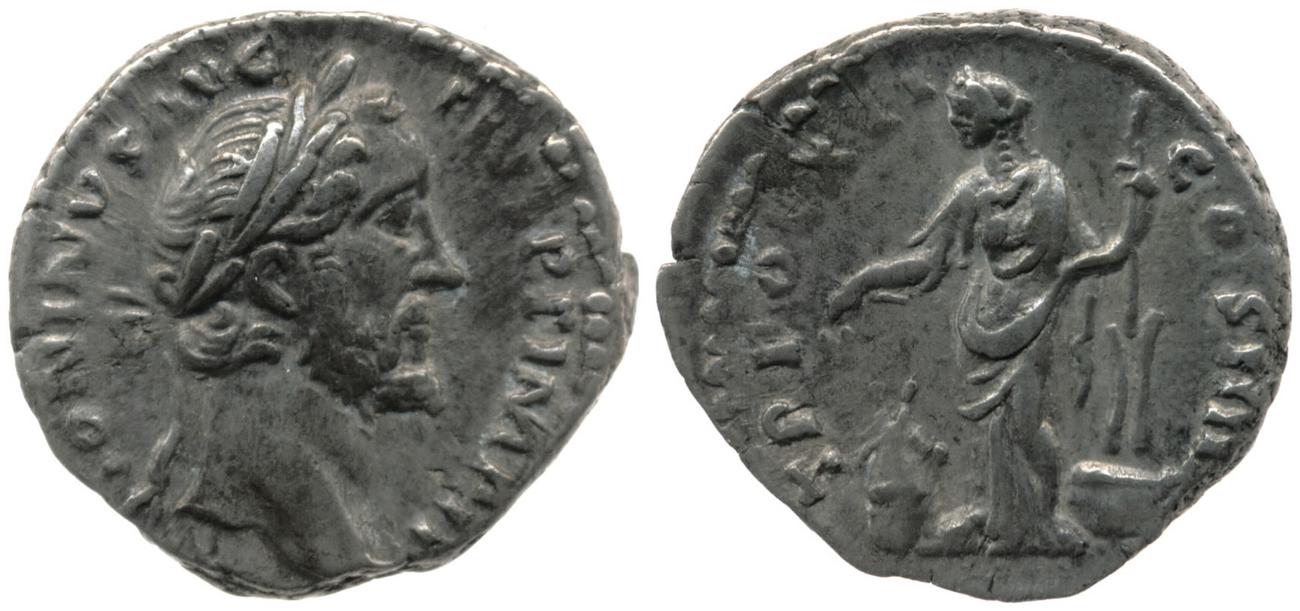
© The Trustees of the British Museum, 1988,0519.14. CC BY-NC-SA 4.0. https://www.britishmuseum.org/collection/object/C_1988-0519-14
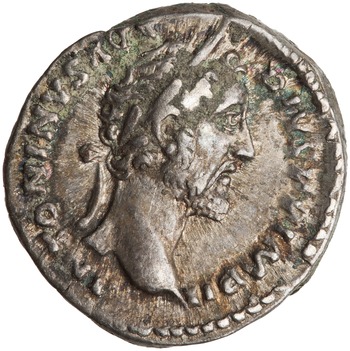
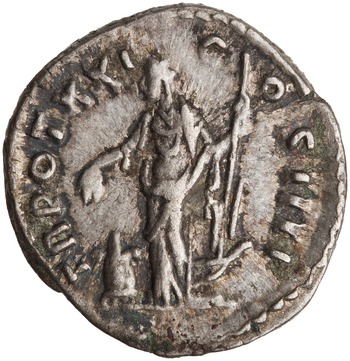
American Numismatic Society, 1956.127.476. CC BY-NC 4.0. https://numismatics.org/collection/1956.127.476
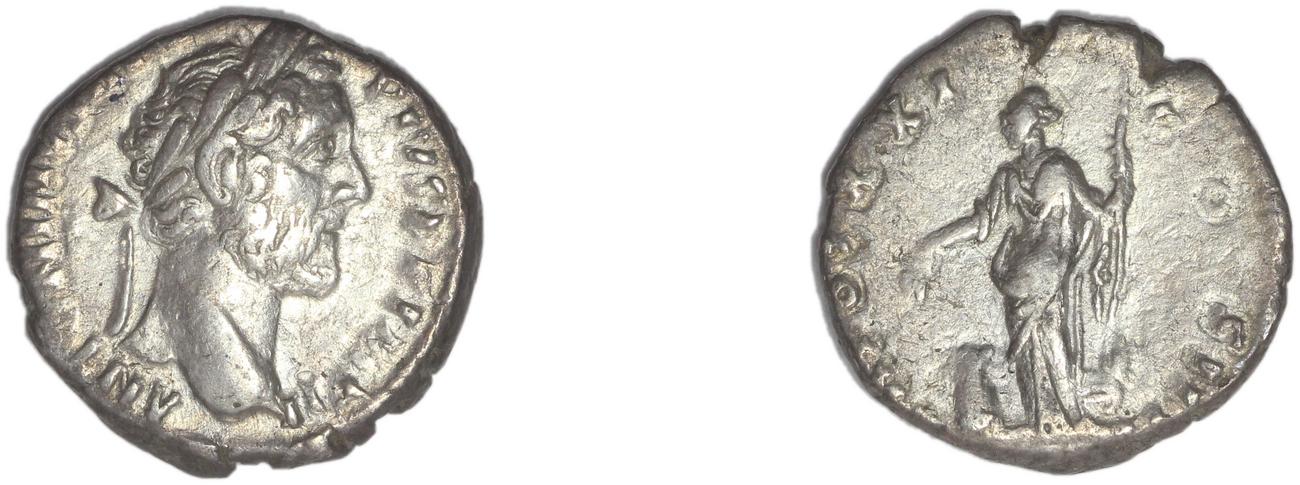
© The Trustees of the British Museum, 1994,0915.410. CC BY-NC-SA 4.0. https://www.britishmuseum.org/collection/object/C_1994-0915-410
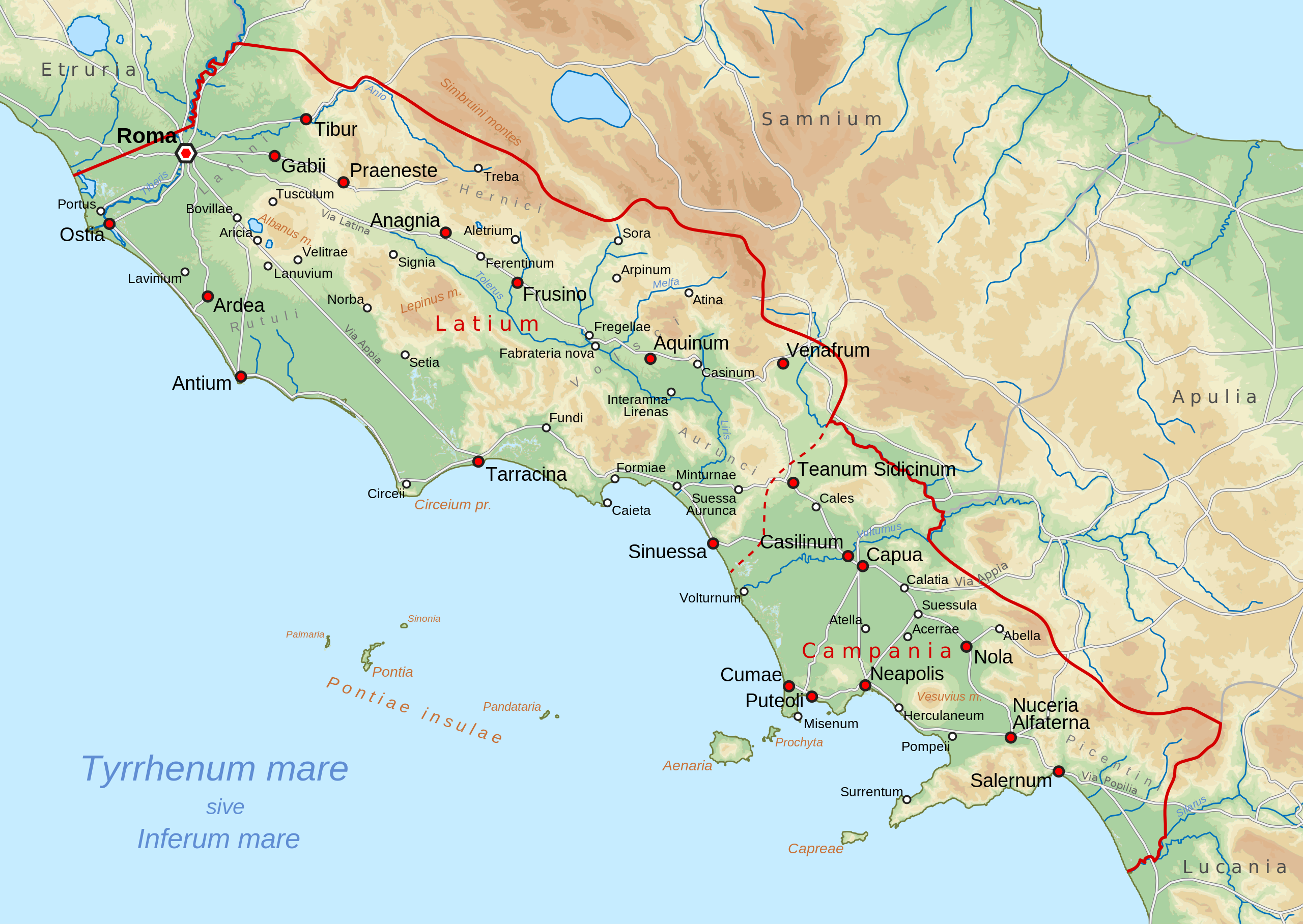
Regio I, Latium et Campania — the heartland of Roman Italy as organized under Augustus. Roma sits at the upper left, marked by the map’s hexagonal capital symbol and bold label. Ostia and Puteoli, the grain ports this coin’s Annona presided over, are both on this map — the denarius advertises the sea-lane that ends at the Tiber’s mouth.
“Map of Augustan Regio I Latium et Campania” by Tomisti (Wikimedia Commons), File:Regio I Latium et Campania map.svg, licensed CC BY-SA 4.0; cities and roads based on the Digital Atlas of the Roman Empire (DARE) and Pleiades; topographic base © OpenMapTiles, © OpenStreetMap contributors. Reproduced unmodified.
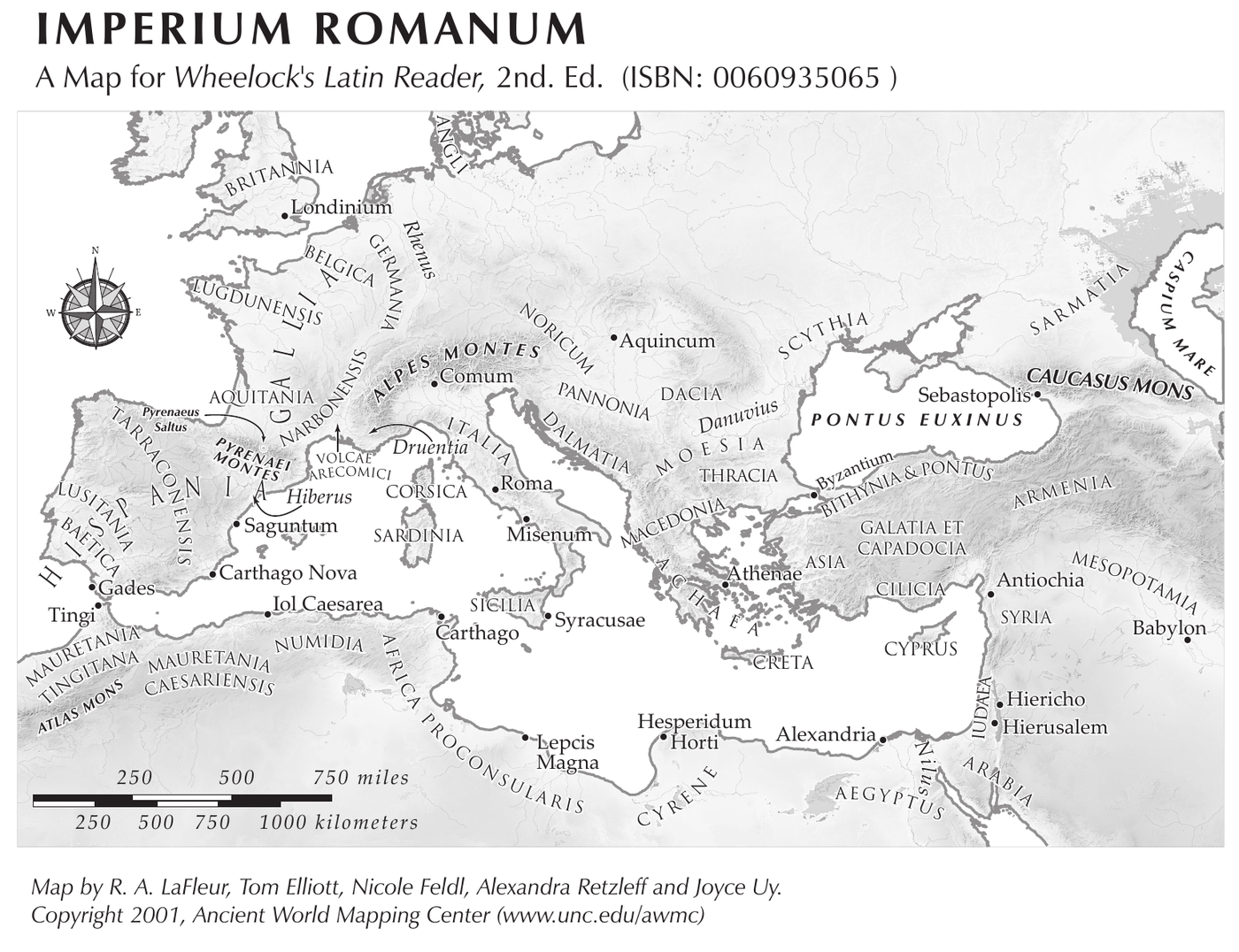
Roma sits at the center of Italia. ANNONA AVG is about two places on this map more than Rome itself: Alexandria and Africa Proconsularis. The grain fleets came from the Nile delta and the North African coast to Puteoli and Ostia, and the annona was the machinery that kept a million people in the city fed.
By 157 AD Antoninus Pius had governed the Roman world for nearly twenty years without commanding an army in person or leaving Italy — a record no other emperor of the first two centuries approached. What his government did instead, year in and year out, is what this coin advertises: it fed Rome. Annona, the personified grain supply, stands with wheat-ears in hand over the modius (the official grain measure, here at her feet) and rests her other hand on a ship’s rudder set against a prow — harvest, measure, and the sea-lane from Alexandria and Carthage compressed into one figure. For the city’s hundreds of thousands of dole recipients, she was arguably the most important divinity on the coinage.
Graphic: JSB Coins (CC0).
Behind the serene figure stood the largest logistics operation of the ancient world. Rome in the second century held somewhere near a million people, of whom roughly two hundred thousand male citizens drew the free monthly grain ration; feeding city and dole together consumed on the order of two hundred thousand tonnes of wheat a year, the great bulk of it shipped from Egypt and North Africa in private merchantmen sailing under state contract. The praefectus annonae — one of the empire’s most senior equestrian officials — ran the system; the fleets ran to the Tiber-mouth harbors Claudius had dug and Trajan had perfected with his hexagonal basin at Portus; and the whole machine had exactly one public face, the goddess on this coin. When the machine faltered, the emperor paid: the Historia Augusta records that in a famine Antoninus supplied oil, grain and wine to the people free of charge, at his own expense (Life of Antoninus Pius 8) — precisely the emergency the coinage’s routine Annona types were designed to promise would never come. The same goddess would still be doing the same work, in a far darker Rome, half a century later: compare the Annona denarius Caracalla struck in 212, the year he murdered his brother — the contrast between the two contexts is the best argument for keeping both coins.
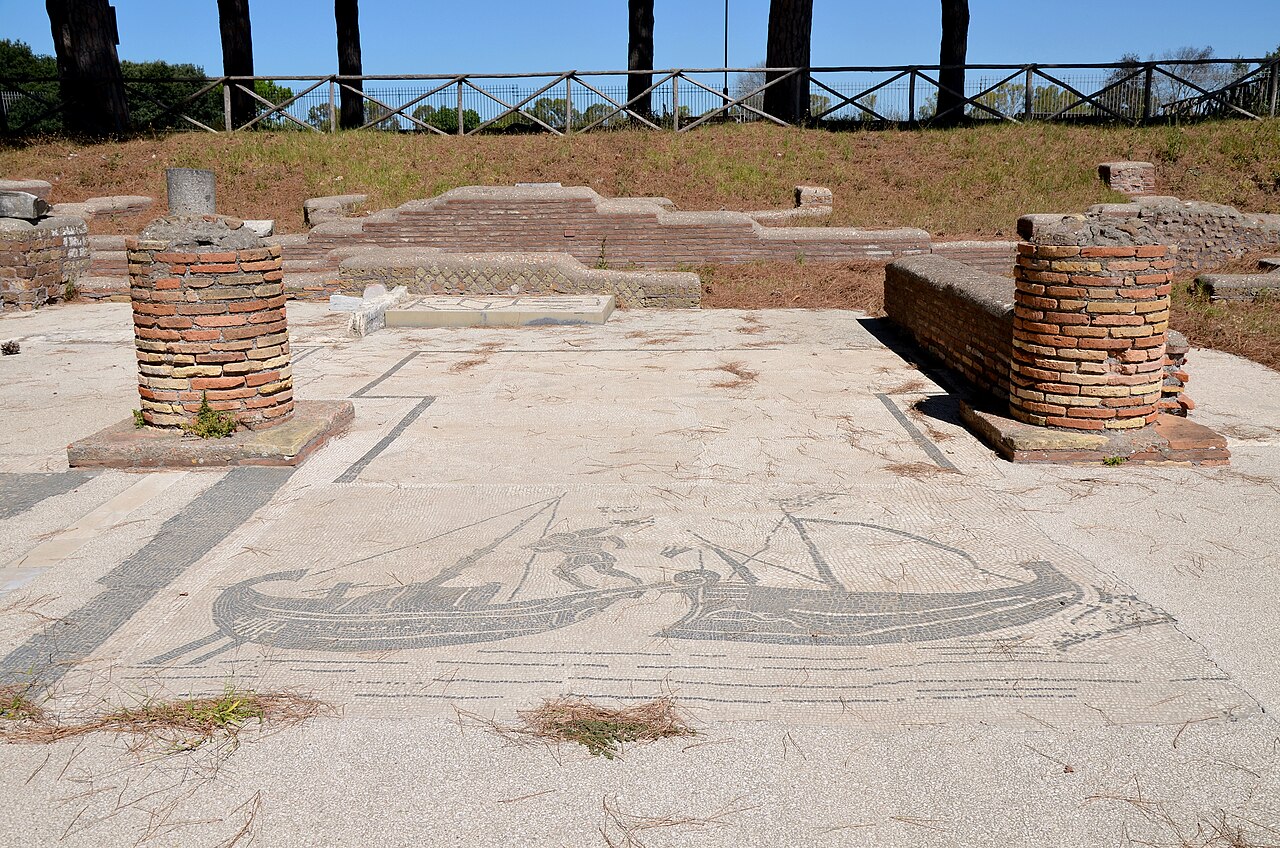
Photo: Carole Raddato, Wikimedia Commons, licensed CC BY-SA 2.0, reproduced unmodified.
The reverse legend is pure chronology — tribunician year 21, consul four times — and that administrative blandness is itself the message of late-Antonine coinage: no wars to declare, no victories to claim, just the machinery running. The mechanics repay a moment’s attention. The tribunician power renewed each 10 December, so TR POT XXI brackets this strike between 10 December 157 and 9 December 158; it is the legend, not the design, that dates the coin, since Annona served the mint as a standing type across many years. The obverse’s IMP II reaches further back — the second imperial salutation, taken about 142 for the victories in northern Britain that pushed the frontier to the Antonine Wall, the one significant military event of the reign, fifteen years old by this issue and still the emperor’s only battle honor. The historian’s cliché that the age of the Antonines was the happiest the human race has known (Gibbon’s famous verdict on the period from Nerva to Marcus) rests substantially on reigns like this one, and the coin is the cliché’s small-change form. Three years later Pius was dead, succeeded — smoothly, by the script Hadrian had written a generation earlier — by Marcus Aurelius.
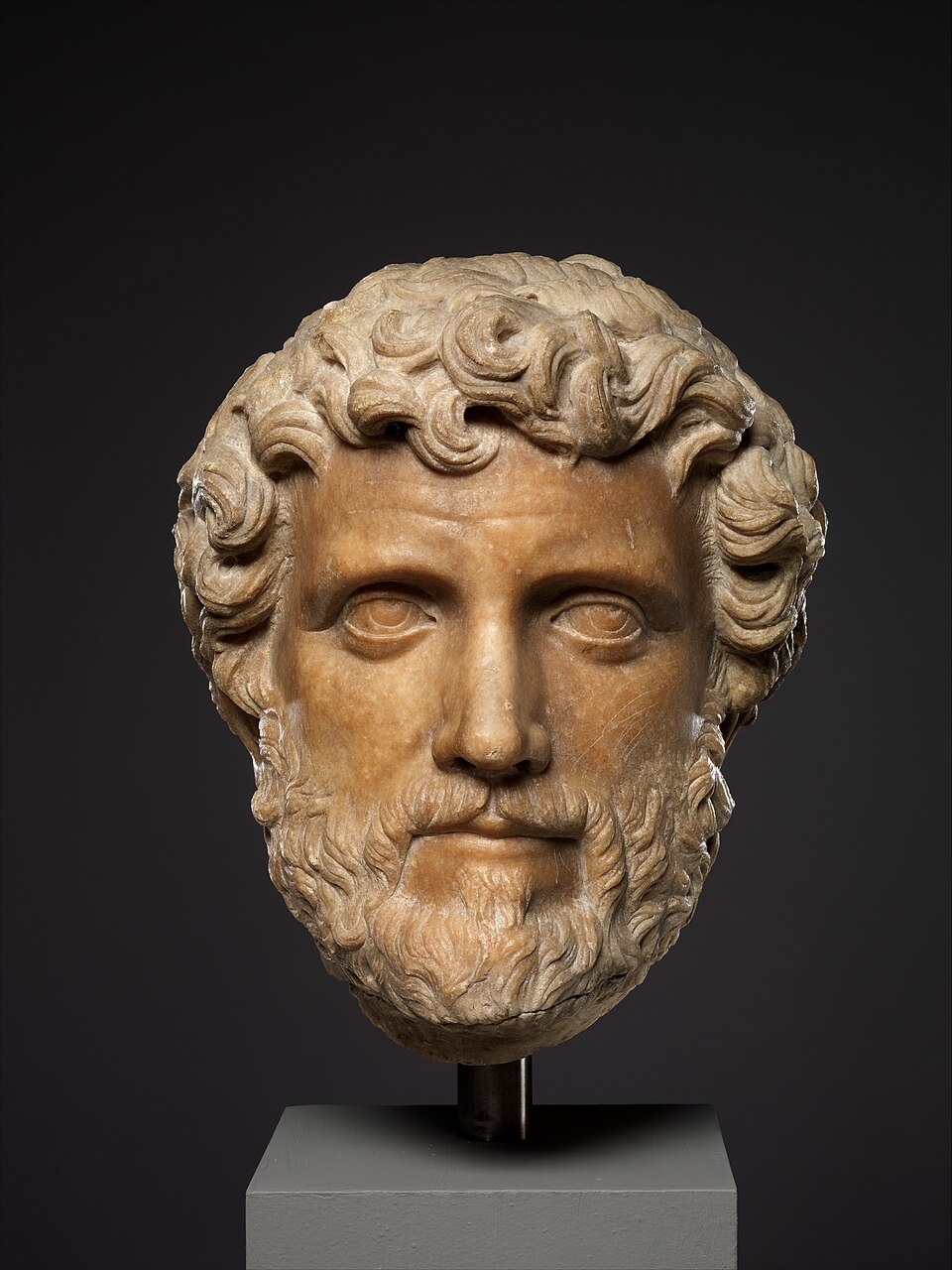
Image: The Metropolitan Museum of Art, via Wikimedia Commons, CC0; reproduced unmodified.
This is the collection’s second denarius of Pius, from the opposite end of the reign to the accession-year Minerva issue of 138: the pair brackets the reign, the new emperor still carrying Hadrian’s name on the one, the old emperor counting his twenty-first tribunician year on the other.
The Historia Augusta life (linked above) is short and readable, if unreliable in its details; the sober modern account of the grain system is G. Rickman’s The Corn Supply of Ancient Rome (1980), still the standard. The ANS’s OCRE database serves RIC III 274 with museum specimens (no deep link here, per the collection’s verified-links rule — search “RIC III Antoninus Pius 274”); the WildWinds index is the quick visual check. For the Annona iconography across reigns, this collection’s own pair — this coin and Caracalla’s — is a two-point research set already.
Attribution: RIC III 274; RSC II 1083; BMCRE IV 901, per Forum Ancient Coins’ tag — see the WildWinds Antoninus Pius index for the type. On the annona system and its iconography: G. Rickman, The Corn Supply of Ancient Rome (1980); the famine relief, Historia Augusta, Antoninus Pius 8; the Antonine Wall salutation, HA Pius 5 with the standard commentaries; the reign generally: Historia Augusta, Antoninus Pius; the Gibbon verdict: Decline and Fall, ch. 3.
TR POT XXI fixes the issue to 10 Dec 157 – 9 Dec 158 AD, late in the reign. The obverse IMP II records the emperor's second imperial salutation, taken for victories in Britain (c. 142); Annona with modius, grain and ship's gear is the mint's standing grain-supply type, struck in many tribunician years — the reverse legend, not the design, dates the coin. Attribution string from Forum Ancient Coins' tag: RIC III 274, RSC II 1083, BMCRE IV 901.
John's Ancient Coin Collection · Type · antoninus-pius-annona-denarius
Image credits for this coin — photographs, maps and graphics used on this page
,_Statio_25,_Black-and-white_mosaic,_transferring_cargo_(amphorae)_from_one_ship_to_another_-_dolphin,_Ostia_Antica,_Italy_(35115303995).jpg)
